
Though fall is already giving way to the crisp air of winter here in Rome, the autumn leaves are only now in full force. Their orange and golden glow is set nicely against the bluish haze, which seems to hover perpetually over the Tiber. I imagine this haze is some strange mixture of fog, cigarette smoke, and exhaust fumes from the heavy traffic. In other words, the autumnal atmosphere in which I live is nearly as melancholic as I am.
There is one thing missing from all this—one fixture of American culture for which I have a great love—that would perfect the scene: a coffee house.
When people ask what things I miss about America, I often mention the American coffee scene. This comes as a surprise to many. And I can imagine you might be thinking what many do: Ryan, are you crazy? Rome is full of espresso bars! One can hardly walk a single block without smelling the delectable aroma of espresso emanating from a quaint corner café!
I grant that Rome has its cafés, but there is a great difference between an espresso bar and a true coffee house. While the slow pace of Italy typically wins out against the States in the way of leisure, I have found its espresso bars to be surprisingly utilitarian. When one goes for coffee in Rome, he orders his drink, drinks it whilst standing, and departs. It’s a fairly fast affair; wonderful coffee, to be sure, but between the small drink and limited seating, there isn’t much reason to linger for all too long—especially not to open a book or begin a conversation. As you know, American coffee shops are usually quite different. They are often cozy, quaint, wooden, and warmly lit… conducive to both study and conversation. They are the kind of thing you might expect to see in the Old World.
And in fact, the American coffee shop, as I understand it, developed out of the Viennese coffee house, spread to Germanic Europe, and came to us through Great Britain. These coffee houses were not mere recaffeination stations, but a sort of socio-intellectual forum. People went not only to sip coffee, but to socialize, read, paint, work, debate, prepare sermons, and discuss all sorts of affairs. Hemingway, Sartre, Kierkegaard, and Eliot are some noteworthy examples of those who engaged coffee house culture in such a way.
The vestiges of classical European coffee house culture are seen in the American coffee shop; people frequent coffee shops for the same aforementioned reasons (with the addition of open mic nights, poetry readings, and small concerts). More than being a purely aesthetic fixture, I argue coffee shops have been—and will continue to serve as—a kind of sustaining force of leisure in American life. As America struggles ever more deeply with utilitarianism in this age of social media and unlimited access to information, we are reading less than ever and having far fewer conversations with real people than we ought. In light of this, coffee shops offer an invitation to reengage many great forms of authentic leisure. Of course, you may find some that are more utilitarian than others… less conducive to study, more harshly lit, noisier, and less wooden than they could be… But with the great number of traditional coffee shops, the invitation remains.
I, for my part, have seen and partaken of many great leisurely things in the context of a cozy coffee shop. From writing copious portions of my undergraduate thesis, to sketching my surroundings, to poring over old books, to discussing with good friends all things from phenomenology to friendship itself, there has been nothing like doing so with a warm mug close to hand.
At the seminary, I’m thankful to have a Mr. Coffee machine on my desk, which has been a great aid in my intellectual and spiritual endeavors for the last year and a half. My family recently sent me some grounds from an Orthodox Monastery in Washington. While I haven’t yet been to a coffee shop in which I can camp out here in Rome, I have true American coffee, a nice mug, and many great books to sit with. It has been a grey and dreary autumn, and the taste of home has made it quite enjoyable.
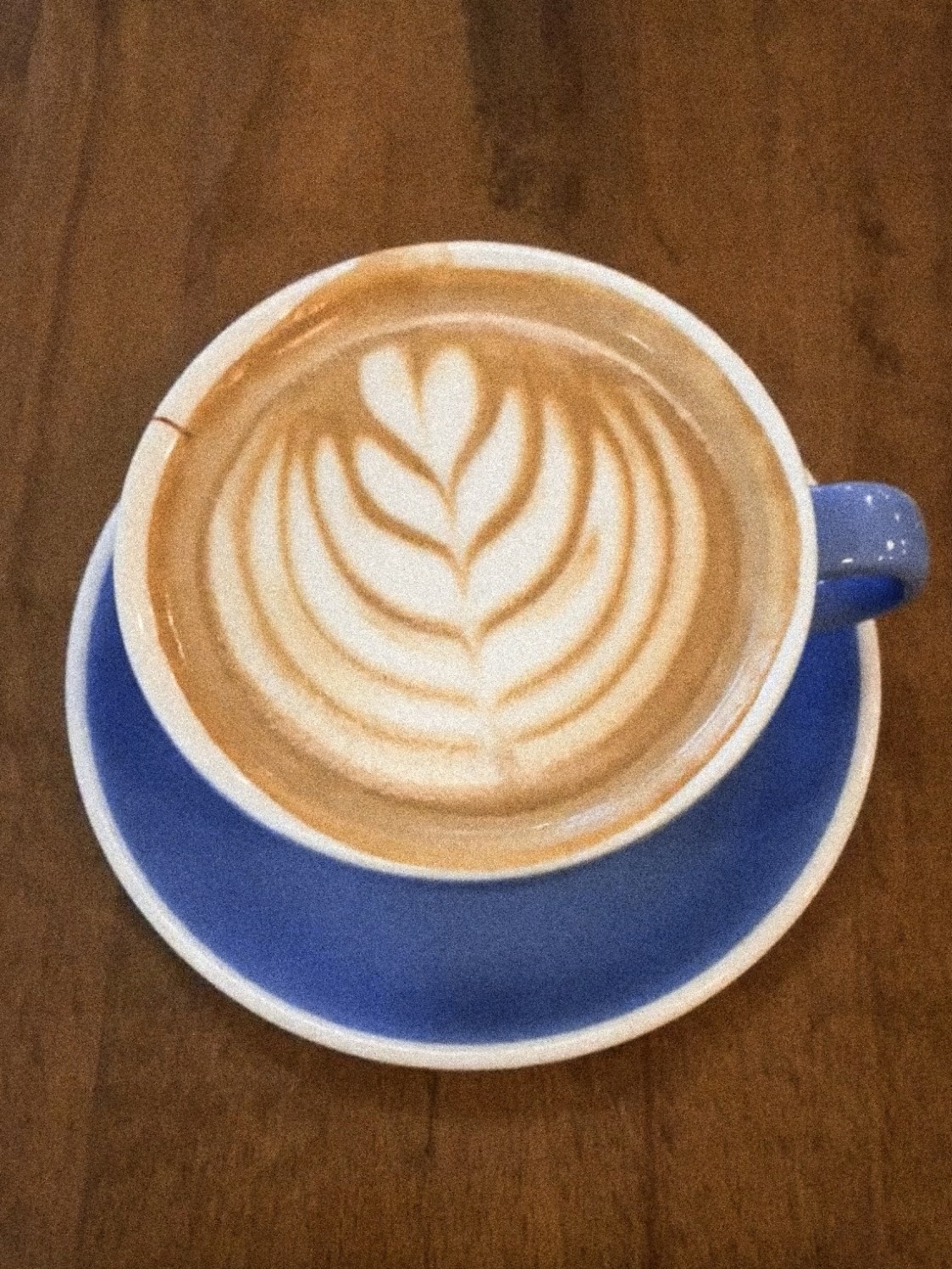
A mug of coffee from my favorite coffee shop in Waco, TX.
 Ryan P. Both